
Pedestrian management is a critical component of every successful traffic management plan. Whether you’re working on road construction, utility maintenance, civil infrastructure, or public events, ensuring the safe movement of pedestrians around work zones is essential for protecting the public, maintaining accessibility, and complying with industry standards.
Why Pedestrian Management Matters
Every worksite presents unique challenges for pedestrians, including:
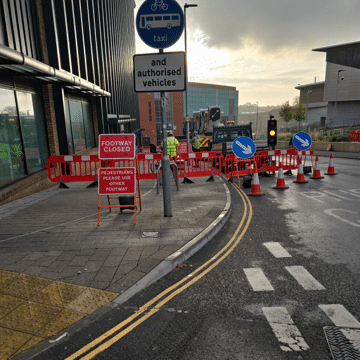
- Temporary footpath closures
- Road crossings
- Construction barriers
- Vehicle access points
- Reduced visibility
- Accessibility requirements for people with disabilities
A well-designed pedestrian management plan helps minimise these risks while ensuring safe, convenient, and compliant access for all users.
How We Approach a Pedestrian Management Project
We keep our process straightforward, whether you are booking a single pedestrian crossing or a full pedestrian management plan for a longer project.
- Submit your request. Tell us about the site and the works involved. This takes around 30 seconds and gives us enough to start scoping the job.
- Receive a quote. We provide a free, no-obligation quote, typically within 24 hours, based on the information you give us.
- Schedule a site visit. Where needed, we arrange a site visit at a time that suits you, so we can confirm the layout, pedestrian flow and any access constraints before work begins.
From there, we handle the practical delivery, and our office team can also manage the wider paperwork around a scheme, including permits, advance warning signage and CAD drawings, so the pedestrian management side of your project is covered from planning through to delivery.

Where Pedestrian Management Is Used
Pedestrian management is relevant wherever normal foot traffic is disrupted by temporary works. This commonly includes:
- Roadworks and highway works, where footways are closed, narrowed or made temporarily inaccessible, and an alternative route or crossing point is needed
- Construction sites, where pedestrian routes pass close to site entrances, deliveries or plant movements, and clear segregation reduces the risk of conflict between people and vehicles
- Utility works, such as drainage, gas, water or fibre works, which can affect pavements and footpaths for short or extended periods, often with limited notice
In each case, the aim is the same: to keep pedestrians safe and to keep a route available wherever it is practical to do so, rather than simply closing access without an alternative. Where a route genuinely cannot stay open, we look at the most sensible diversion available, based on the surrounding streets and paths.
Why Choose South Coast Traffic Management
South Coast Traffic Management is a family run business providing traffic and pedestrian management services across Dorset, the Bournemouth, Christchurch and Poole area, Devon, and Cornwall. We are accredited to BSI, and hold Constructionline, CHAS, TMCA, PQS Approved and Achilles UVDB Silver Plus status, reflecting our approach to health, safety and quality management.
We own all of our own equipment and use qualified, experienced operatives on every job, giving us direct control over availability and delivery timescales rather than relying on third-party hire. Our office team can also handle the wider requirements around a scheme, including permits such as TTROs and TTLs, advance warning signage and CAD drawings, alongside the practical delivery of the works on site.
Customers also point to our on-time completion guarantee, our eco-friendly approach to how we run our operations, and our 4.7 star Google reviews as reasons they continue to use us for repeat projects. Quotes are free and provided without obligation, and our operations run 24 hours a day, seven days a week, so we can respond to reactive or emergency requirements as well as planned works.
Contact Us To Learn More
You can learn more about the excellent two-way light systems that we have available by reaching out to our experts today. We’re happy to discuss our two-way light systems and other similar traffic management products at length. Call us now on 01202 697 127 or fill out our online contact form to get started.